🗓️
2024
Drawing from my experience as a special education teacher, I identified a critical gap in organizational skills among high school students, particularly those with ADD/ADHD. Research shows that digital tools can greatly enhance executive function in ADHD patients! TaskGram aims to bridge this gap by combining the engaging social aspects of Instagram with productivity features and gamification. This innovative approach seeks to boost motivation and organizational skills through an interactive, rewarding process, transforming how students with ADHD manage their academic lives.
Key Findings
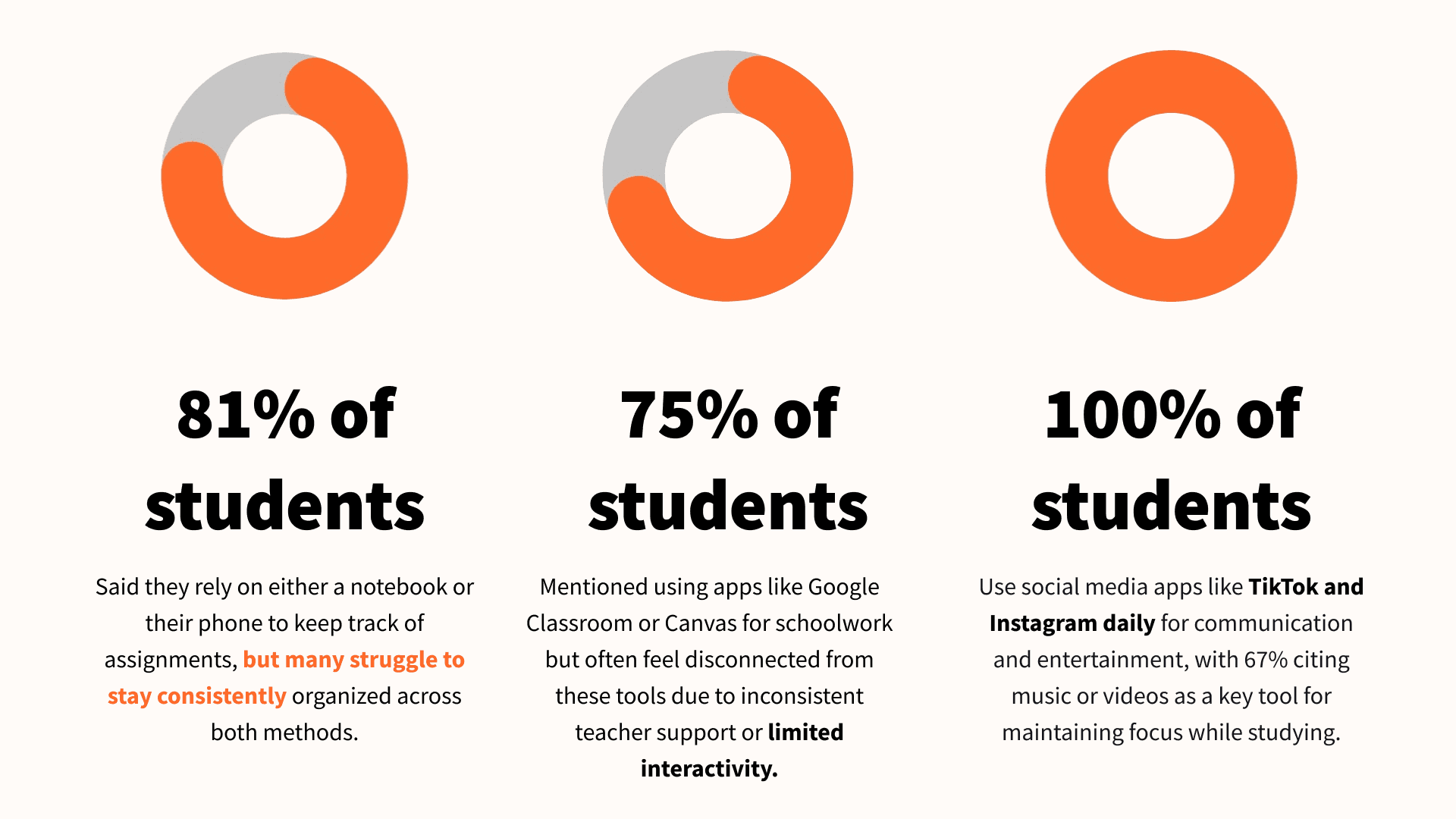
The design process began with extensive user research—including one-on-one interviews with four high school students from New York City, evenly split between neurotypical and ADHD participants. These interviews highlighted a few key findings: students love connecting socially online but feel frustrated by traditional school productivity apps that isolate or overwhelm them. They emphasized the need of tools that are interactive, visually appealing, and socially validated.
Additional secondary research revealed a measurable link between organizational improvement and academic achievement for ADHD individuals. These insights shaped TaskGram’s value proposition: merge the appeal of social media with the scaffolding of productivity.
From this foundation came three key features:
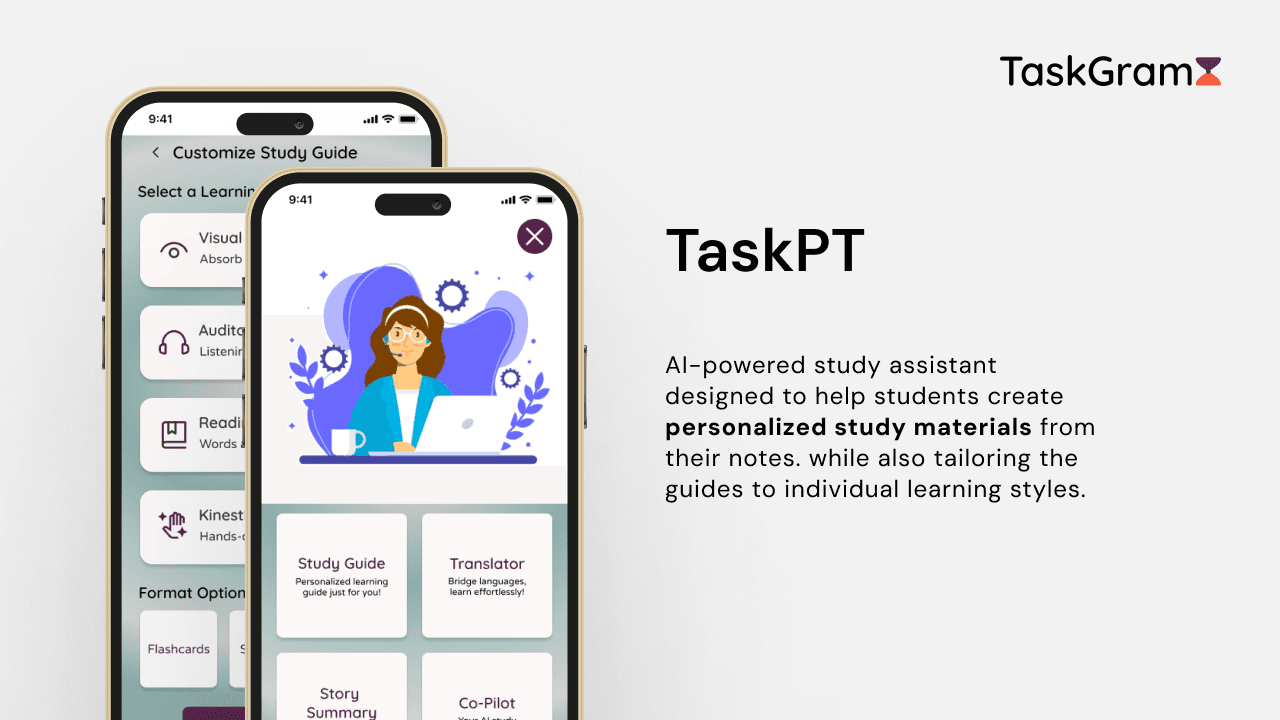
TaskPT, an integrated AI study assistant that generates short, customized study guides and reminders crafted from user input.
A gamified reward system that displays progress points visually and encourages consistency over perfection—rewarding effort and growth.
Lastly, the social feed, designed to emulate the rewarding dynamics of likes, comments, and peer recognition—turning peer accountability into positive reinforcement.
Each feature empowers students to learn, share, and stay organized while enjoying the process. The app’s accessibility-focused design ensures legibility, balanced content density, and inclusive interactions for neurodivergent users.
Impact
When we tested TaskGram with a small group of students and UX peers, the results showed real promise.
About 80% of students were able to finish their assigned tasks successfully, and most said the app was easy to use and understand. They liked how clean the layout looked and how natural the flow felt when navigating between sections.
Based on their feedback, I made several updates—like improving color contrast for better readability, adding short explanations under each AI feature, and simplifying the onboarding screen so new users could start right away.
What I Learned
Beyond the numbers, this project reminded me that good design isn’t just about how an app looks—it’s about how it makes people feel. TaskGram helped students feel more organized, less overwhelmed, and proud of their progress. It showed me how accessibility and thoughtful design can work together to give every type of learner a fair chance to succeed. By creating a product that is both functional and fun, TaskGram proves that inclusive digital tools can truly make learning a more positive and empowering experience.